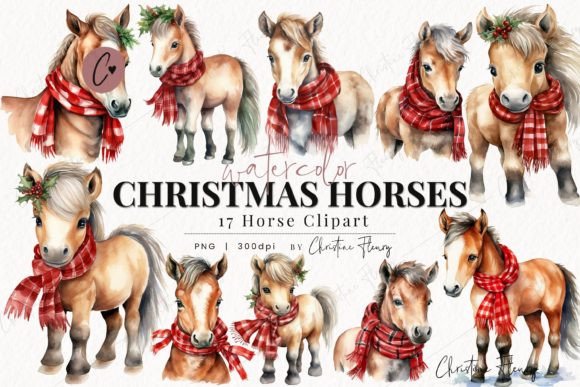
Watercolor Christmas Horse Clipart Review
As a designer who spends half her life staring at stitch density charts and the other half worrying about whether a customer will actually wear their custom embroidered tote, I approach every new asset with a healthy dose of skepticism. The digital embroidery market is flooded with clipart that looks beautiful on screen but falls apart under the needle. Today, I am putting Watercolor Christmas Horse Clipart through its paces to see if it has what it takes for real-world application, from boutique holiday collections to personalized nursery gifts.
When you first load this file into your digitizing software or view it in a preview window, the immediate takeaway is the mood. It isn’t just a rigid vector; it carries a soft, painterly quality that mimics traditional watercolor techniques. For an embroidery project, this translates to a design that feels organic rather than mechanical. The horse motif is classic, evoking a sense of nostalgia and warmth that fits perfectly within the winter season without feeling cliché. It strikes a balance between whimsical and elegant, which is a tricky line to walk. Too cute, and it might feel juvenile for adult apparel; too serious, and it loses the festive charm. This design lands squarely in the "cozy luxury" zone.
Visual Appeal and Design Personality
The visual personality of this Illustrations piece relies heavily on its negative space and color blending. In the context of machine embroidery, where we are limited by thread thickness and stitch direction, the ability of a design to convey texture is paramount. Here, the watercolor effect suggests a softness that can be achieved through careful thread selection and stitch type variation. The shape of the horse is distinct, allowing for clear recognition even when scaled down. This is crucial for small products like baby onesies or cap logos, where detail loss is a common complaint.
From a branding perspective, this design offers high versatility. It doesn’t scream "holiday sale"; instead, it whispers "handmade gift." This subtlety builds trust with buyers who are looking for unique, artisanal items rather than mass-produced merchandise. For Etsy sellers and craft business owners, this distinction is vital. A product featuring this clipart feels curated and thoughtful, elevating the perceived value of the finished item.
Real-World Application: Where Does It Shine?
I have been testing how this embroidery file performs across various substrates, and there are clear winners. The most natural fit is undoubtedly the tote bag design. Canvas totes provide a stable, flat surface that allows the intricate details of the horse’s mane and tail to shine. When paired with neutral tones like cream, beige, or light gray canvas, the colors pop without overwhelming the viewer. It creates a perfect accessory for holiday shopping trips or cozy library visits.
Another strong contender is sweatshirt embroidery. The soft fleece or cotton blend of a hoodie provides a comforting backdrop for the gentle aesthetic of the horse. Imagine a crewneck sweatshirt with a small, left-chest placement of the horse, perhaps accented with a few scattered snowflake stitches. It’s understated yet festive, appealing to adults who want to participate in the holiday spirit without wearing loud graphics. It also works beautifully as a back print on premium hoodies, creating a statement piece for boutique retail.
For the small shop product market, consider apron designs. Kitchen towels and aprons are perennial bestsellers during Q4. The watercolor style pairs exceptionally well with rustic kitchen themes—think wooden utensils, checkered tablecloths, and gingerbread decorations. It adds a touch of sophistication to functional items, making them desirable as housewarming gifts or wedding presents.
Baby Items and Nursery Decor
We cannot overlook the potential in the baby embroidery sector. Parents are often drawn to soft, non-threatening imagery for their little ones. This horse clipart is gentle enough for a newborn’s blanket or a christening gown. However, caution is advised here. Ensure the design is simplified if placed on tiny areas like mittens or booties. For larger items like a receiving blanket or a quilted wall hanging, the full detail of the watercolor effect can be appreciated, adding a sentimental value that parents cherish.
Technical Considerations and Pitfalls
While the artistic merit is high, practical execution requires attention to detail. Not all fabrics are created equal, and some present significant challenges for this specific design.
- Textured Fabrics: Avoid placing this design on heavy tweeds or bouclé wools. The complex curves of the watercolor style may get lost in the fabric texture, resulting in a muddy appearance.
- Stretchy Materials: Thin jersey knits can distort the shape of the horse if not stabilized properly. Always use a cut-away stabilizer for stretchy fabrics to maintain the integrity of the stitch density.
- Dark Fabrics: If using dark backgrounds, you must ensure sufficient underlay stitching. Without proper underlay, the top threads may show gaps, ruining the smooth watercolor illusion. Light-colored threads on dark fabric require more care to prevent the fabric from showing through.
- Small Hoop Sizes: Be wary of scaling this down too far. Tiny lettering or fine details in the horse’s facial features may become indistinguishable after stitching. Test the minimum viable size before committing to production.
Stitching Strategy and Material Selection
To truly capture the essence of this machine embroidery design, your choice of thread and stitch types is critical. Relying solely on standard satin stitches can make the design look stiff and plastic-like. Instead, consider incorporating a mix of satin stitch for outlines, fill stitch for the body masses, and running stitch for delicate details like whiskers or stray hairs. This combination mimics the brush strokes of the original watercolor artwork.
Thread color contrast is another key factor. Use high-quality polyester or rayon threads that offer good sheen and colorfastness. Matte cotton threads might dull the vibrancy of the image, while overly shiny threads could create glare under bright lights. Always test your thread colors against your chosen fabric under the same lighting conditions where the final product will be displayed or used.
Pre-Production Checklist
Before you start churning out finished products, follow these steps to ensure quality control:
- Scrap Fabric Test: Always run a test stitch on a scrap of your actual production fabric. This reveals issues with tension, pull, and push that virtual previews cannot show.
- Black and White Mockup: Convert the design to grayscale to check contrast levels. If the shapes merge together in black and white, they will likely lack definition in color.
- Stabilizer Check: Confirm that your stabilizer matches the fabric weight. Heavy fabrics need heavy stabilizers; light fabrics need lightweight tear-aways or wash-aways.
- Licensing Verification: As a professional, you must confirm the licensing terms. Are you allowed to sell finished items? Is there a limit on the number of units? Never assume commercial rights are included unless explicitly stated.
Final Verdict
Watercolor Christmas Horse Clipart is a versatile, emotionally resonant asset that brings a touch of elegance to holiday-themed projects. It is particularly well-suited for custom apparel, personalized gifts, and craft business items that aim for a boutique aesthetic. By paying close attention to fabric choice, stitch variety, and stabilization, designers can transform this digital asset into a stunning physical product that customers will love.
It is not a one-size-fits-all solution, nor should it be rushed onto every available surface. Used judiciously, however, it becomes a powerful tool in your creative arsenal, helping you stand out in a crowded marketplace with designs that feel both handmade and heartfelt. For any digital product seller or creative entrepreneur looking to expand their holiday inventory, this clipart is a worthy addition—provided you respect the technical nuances of embroidery work.