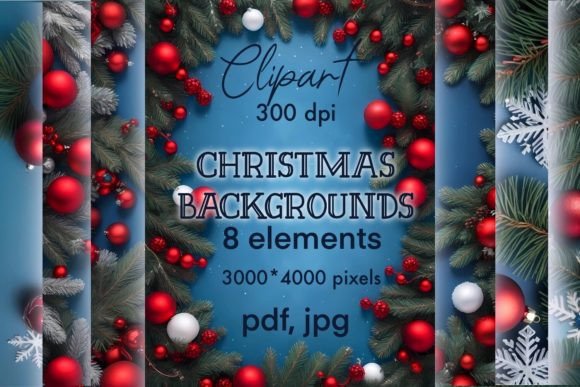
Christmas Backgrounds, Digital Papers Review
When I first opened the Christmas Backgrounds, Digital Papers collection, my immediate thought wasn't about the file formats or stitch counts. It was about the mood. As a designer who spends hours translating flat graphics into three-dimensional stitched reality, I look for that specific spark that tells me a design will hold up under the needle and in the customer's hands. This set of digital papers doesn't just sit there; it sets a scene. The visual personality is warm, nostalgic, and incredibly versatile, making it an ideal candidate for everything from high-end boutique branding to heartfelt holiday gifts.
However, not every digital asset translates well to embroidery. A beautiful illustration on a screen can sometimes fall flat once converted into thread. That is why I decided to put these backgrounds through a rigorous real-world test before recommending them for your next project. Let's walk through how Christmas Backgrounds, Digital Papers performs when we move from the computer monitor to the hoop.
The First Stitch: Visual Impact and Design Intent
The primary strength of this collection lies in its ability to create depth without overwhelming the eye. Unlike solid color fills that can sometimes look blocky in satin stitch, these digital papers offer subtle textures and patterns that mimic the feel of traditional craft materials. Whether you are looking at a paper cutout style, a watercolor wash, or a geometric pattern, the layout is designed to support a focal point rather than compete with it.
For an embroidery designer, this is crucial. When stitching a custom sweater or a personalized tote bag, the background needs to frame the main subject—be it a reindeer, a snowflake, or a family name. These designs provide that framing naturally. They create a cohesive look that elevates a simple embroidered patch into a professional-grade finished product. The visual appeal suggests quality, which directly impacts customer trust and willingness to pay a premium for handmade items.
Real-World Application: From Tote Bags to Nursery Decor
I recently used elements from this collection while preparing a batch of custom holiday merchandise for a local boutique client. The goal was to create a line of embroidered kitchen towels and pillow covers that felt festive but not cluttered. We selected a specific background pattern from the Christmas Backgrounds, Digital Papers set to serve as the base layer for the design.
The results were impressive. On the cotton tea towels, the background texture added a layer of sophistication that made the piece look like a curated gift rather than a mass-produced item. The design held its shape beautifully against the fabric weave, proving that it works exceptionally well for home decor projects. Similarly, when applied to baby clothes, the softer tones and gentle patterns created a sweet, nursery-ready aesthetic that parents loved.
This versatility extends to commercial embroidery projects as well. For Etsy sellers or small shop owners, having a library of high-quality background assets allows you to quickly mock up different variations of a product. You can swap out a plain background for one of these illustrated papers to instantly upgrade the perceived value of a listing photo. It transforms a standard embroidery file into a complete design asset package.
Perfect Pairings for Various Products
- Tote Bag Designs: Use these backgrounds behind large monograms or central motifs to add a pop of color and texture to canvas bags.
- Sweatshirt Embroidery: The patterns work well on the chest area of hoodies, providing a soft backdrop that complements heavy fill stitches.
- Baby Embroidery: Gentle, pastel versions from the set are perfect for onesies and blankets where softness is key.
- Embroidered Patches: These backgrounds can be stitched around the edge of patches to give them a finished, polished border.
- Holiday Embroidery: Ideal for seasonal cards, ornaments, and wall hangings that need a cozy, wintery feel.
Navigating Technical Challenges and Fabric Choices
While the visual potential is high, using Christmas Backgrounds, Digital Papers requires some technical savvy. Not all fabrics are created equal, and the success of your final product often depends on what lies beneath the thread. If you are working with textured fabrics like chunky knits or boucle, the fine details within the digital paper might get lost. In such cases, a simpler background or a larger scale version would be more effective.
Stretchy fabrics present another challenge. When applying a background design that relies on consistent spacing, the stretch of the material can distort the pattern during the hooping process. To mitigate this, always use a proper stabilizer that matches the weight of your fabric. For knit garments, a cut-away stabilizer is usually the safest bet to prevent puckering and maintain the integrity of the background pattern.
Dark fabrics require careful consideration regarding thread colors. If the background design includes light or white elements, ensure you have enough density in your fill stitches to prevent the dark fabric from showing through. Conversely, on light fabrics, darker background elements can create a striking contrast that highlights the intricate details of the Illustrations category.
Where to Exercise Caution
There are specific scenarios where this design set might not be the best fit. Small hoop sizes, typically 4x4 inches or less, can struggle with complex background patterns. If the design features tiny lettering or very detailed corners, shrinking it down too much can result in a muddy, indistinct mess. In these instances, it is better to focus on the primary motif and let the background remain minimal or omit it entirely.
Additionally, products that undergo frequent washing, such as aprons or heavily used work shirts, benefit from durable stitching techniques. Ensure that any satin stitch borders or fill areas are dense enough to withstand friction. If the design relies on long running stitches for the background texture, they may snag easily on rough surfaces. Always review the stitch density before committing to a production run.
Essential Designer Notes for Success
Before you start stitching, there are a few practical steps every professional should take. First and foremost, test the design on scrap fabric. This is non-negotiable. You need to see how the thread colors interact with the specific background pattern and how the fabric behaves under tension.
Check your thread color contrast carefully. A background that looks great on a screen might clash with your chosen thread palette once stitched. It is also wise to inspect small details closely. Sometimes, a line that looks clean in software can break up into jagged edges when stitched at high speeds. Confirm your hoop size early to ensure the entire design fits comfortably without cutting off important elements.
If you plan to sell finished items or digital products, double-check the licensing terms. Some digital papers allow for commercial use on physical goods but restrict resale of the files themselves. Understanding these boundaries protects your business and ensures ethical practices within the craft community.
Finally, consider using black and white mockups to evaluate the design's structure. This removes the distraction of color and helps you see if the composition holds together logically. By following these guidelines, you can confidently integrate Christmas Backgrounds, Digital Papers into your workflow, creating professional, high-value handmade products that stand out in a crowded market.